6 Bridges Cruise Porto
Douro Bridges Explained

How Many Bridges in Porto

The Douro reaches the Atlantic through a granite gorge, and every crossing between Porto and Vila Nova de Gaia had to solve that gorge in its own way. This how many bridges in porto guide counts them, names them, and explains why engineers kept returning to the same short stretch of water. The figure comes first; the context that makes it useful follows.

11 min read Updated 2026-10-01 Fact-checked
How Many Bridges in Porto

Quick answer

Six bridges cross the Douro at Porto: Ponte da Arrábida, Ponte Dom Luís I, Ponte do Infante, Ponte Maria Pia, Ponte São João and Ponte do Freixo. They sit along one continuous stretch of river. Two carry rail only and Maria Pia is retired from service, so the complete set reads best from the water, where cruises run daily between 10:00 and 18:00.

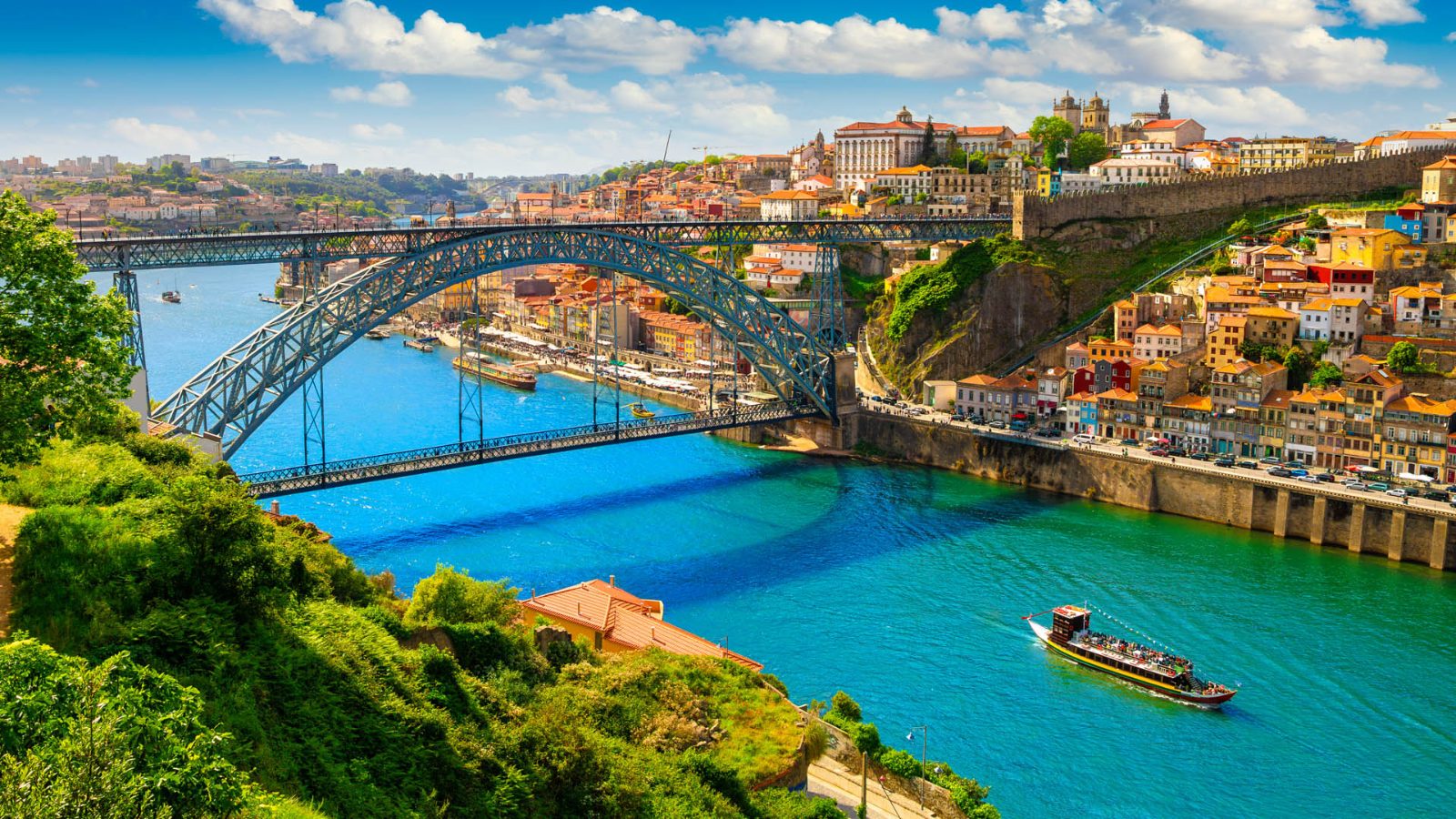
For most of its history, Porto had no bridge at all. Until the early nineteenth century, people and goods crossed the Douro aboard flat-bottomed rabelo boats, or over a temporary pontoon of lashed hulls that the river regularly destroyed. The count visitors ask about today — how many bridges in Porto span the Douro — is therefore a modern figure, assembled across roughly two centuries of engineering rather than inherited from the medieval city. The answer is governed by geology. The Douro arrives at Porto through a granite gorge, with banks rising steeply on both sides: Ribeira to the north, Vila Nova de Gaia and the Serra do Pilar to the south. Any crossing has to clear a wide channel and land high above the water, which made each new bridge expensive and slow to approve. That is why the city has six crossings rather than sixteen, and why these particular Porto landmarks differ so sharply in form — a wrought-iron double-deck arch, a concrete span that once held a world record, two dedicated rail lines, and two motorway-era workhorses routing traffic clear of the centre. Knowing the number matters less than knowing where the six sit. They are spread along a reach of river that no single viewpoint takes in. The upper deck of Ponte Dom Luís I carries metro Line D and pedestrians, so the central pair is easy to walk; the outer crossings, Arrábida downstream and Freixo upstream, are road infrastructure with little provision for walkers. Searches for pontes do Douro or a Porto bridges boat tour tend to end at the same conclusion: the river is the only line of sight that strings all six together in order. Departures leave from Ribeira Pier, inside the UNESCO World Heritage zone, a few minutes on foot from Cais da Ribeira. Visitors planning the day should treat the number as a route rather than a trivia answer. Arriving between 10:00 and 16:00 leaves room before the final daily departures and avoids the worst of the mid-afternoon heat on open decks. Autumn sailings bring lower light and thinner crowds, which suits photography of the ironwork. Anyone still asking how many bridges in Porto cross the Douro will find the figure settled at six, and will find that counting them from a seat on the water takes a single sailing rather than a day of walking.

“The river is the only line of sight that strings all six bridges together in order.”
Facts

Answering How Many Bridges in Porto Span the Douro

The city of Porto and Vila Nova de Gaia are connected by six distinct bridges, each representing different eras of engineering progress and regional development. These structures serve as vital links across the Douro River, marking the transition from historic river crossings to modern transit infrastructure.

1.

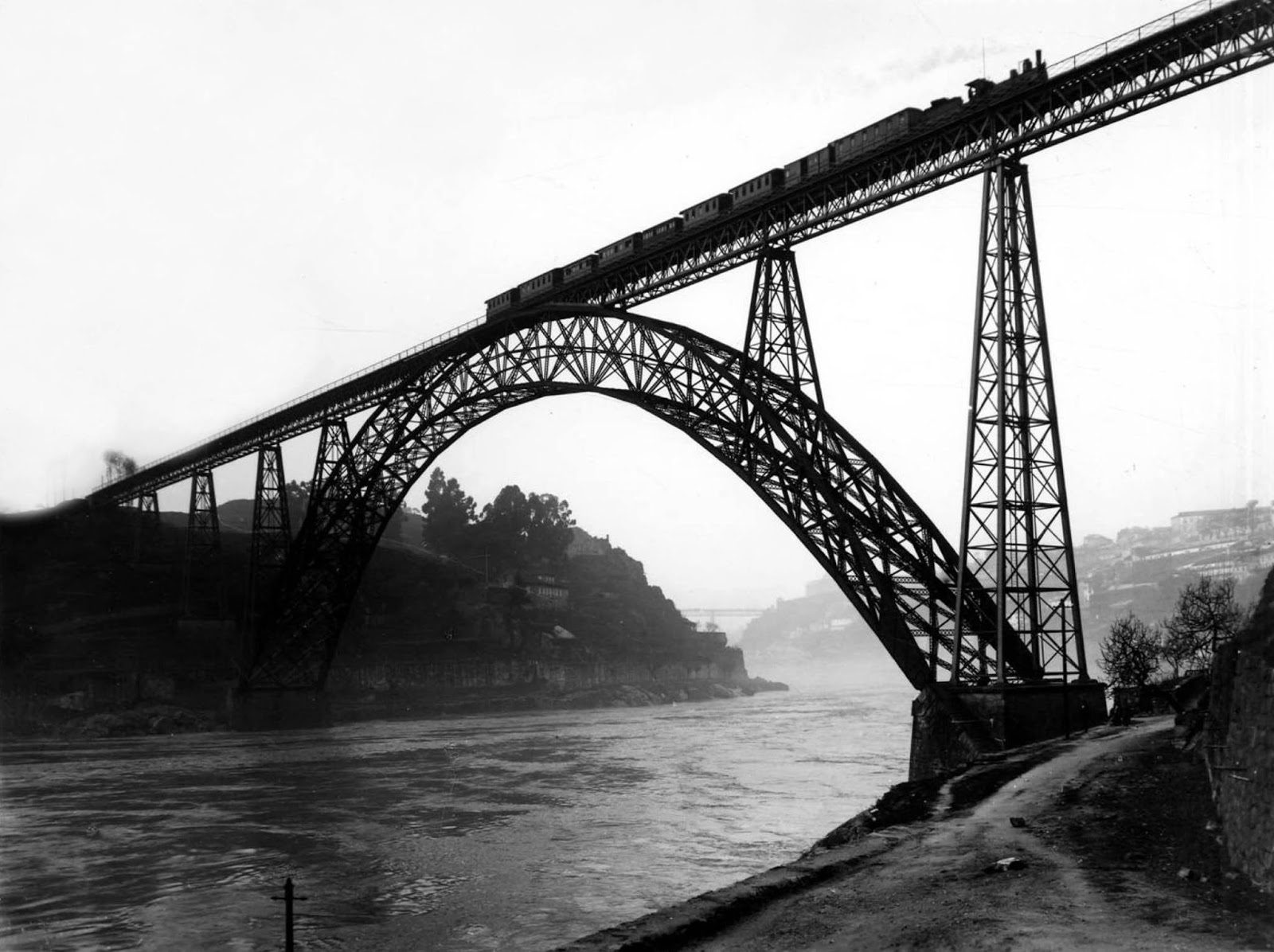
Designed by Théophile Seyrig and Gustave Eiffel, this railway bridge was inaugurated in 1877 and remained in service for over a century. It stands as a testament to 19th-century iron construction techniques.

Dom Luís I Bridge

2.

Completed in 1886, this double-deck metal arch bridge is the most iconic symbol of Porto. It was designed by Théophile Seyrig and originally featured a lower deck for road traffic and an upper deck for rail.

Arrábida Bridge

3.

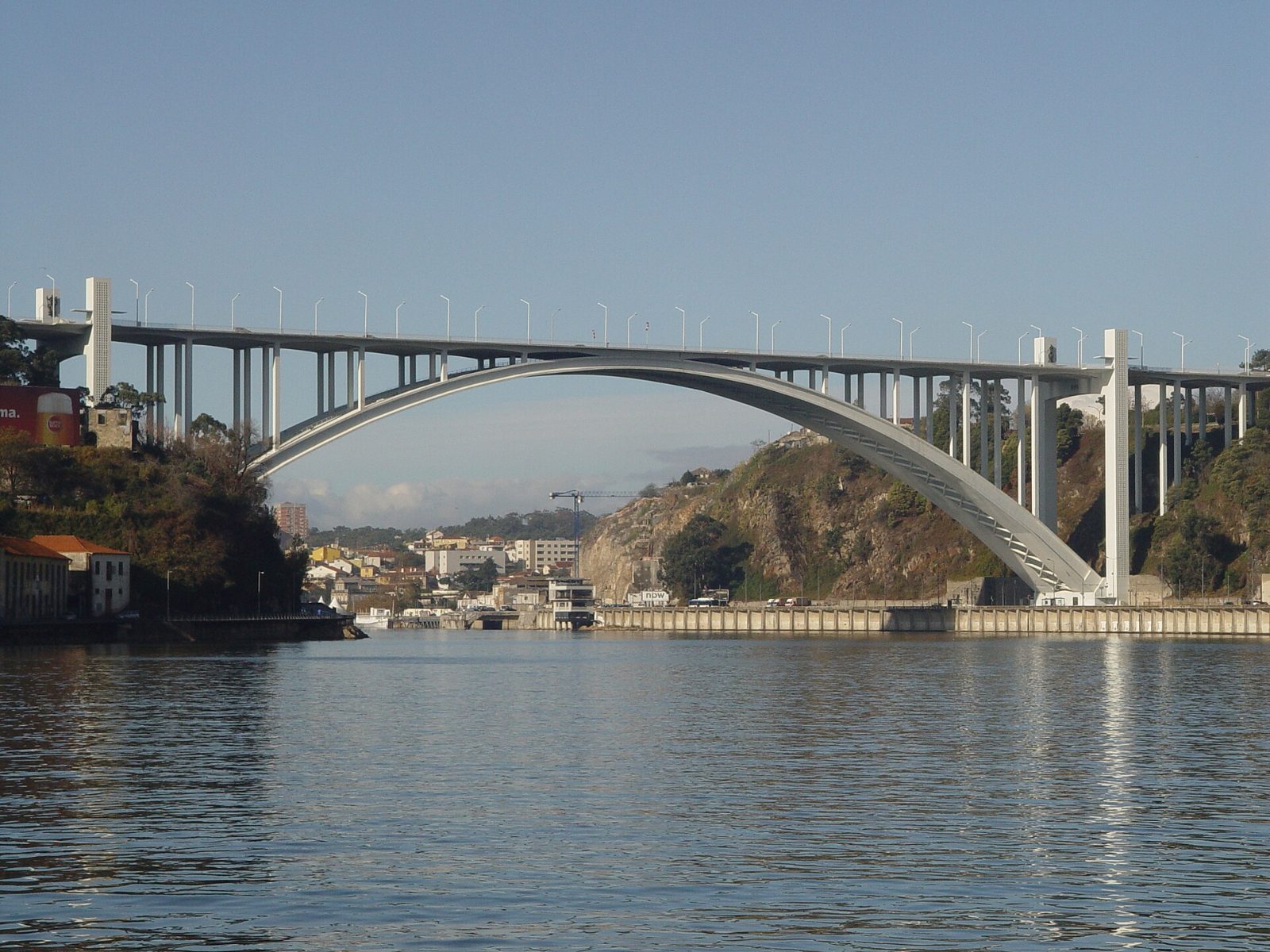
Opened in 1963, this bridge was recognized at the time for having the largest concrete arch span in the world. It serves as a major vehicular artery for the city's western region.

São João Bridge

4.

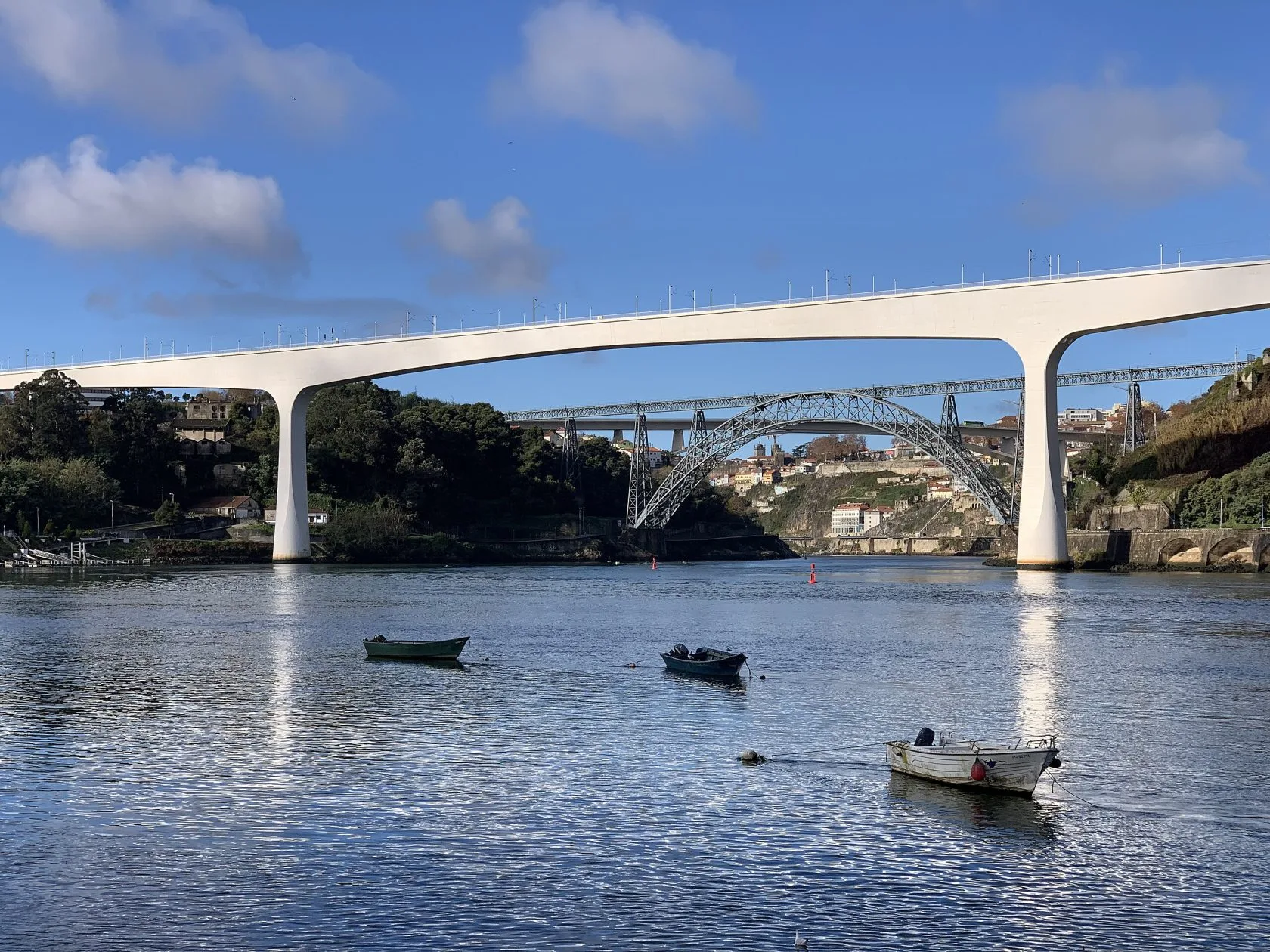
Inaugurated in 1991, this bridge was built to replace the aging Maria Pia railway bridge. Its construction allowed for improved rail capacity and modern logistical efficiency between the two riverbanks.

Freixo Bridge

5.

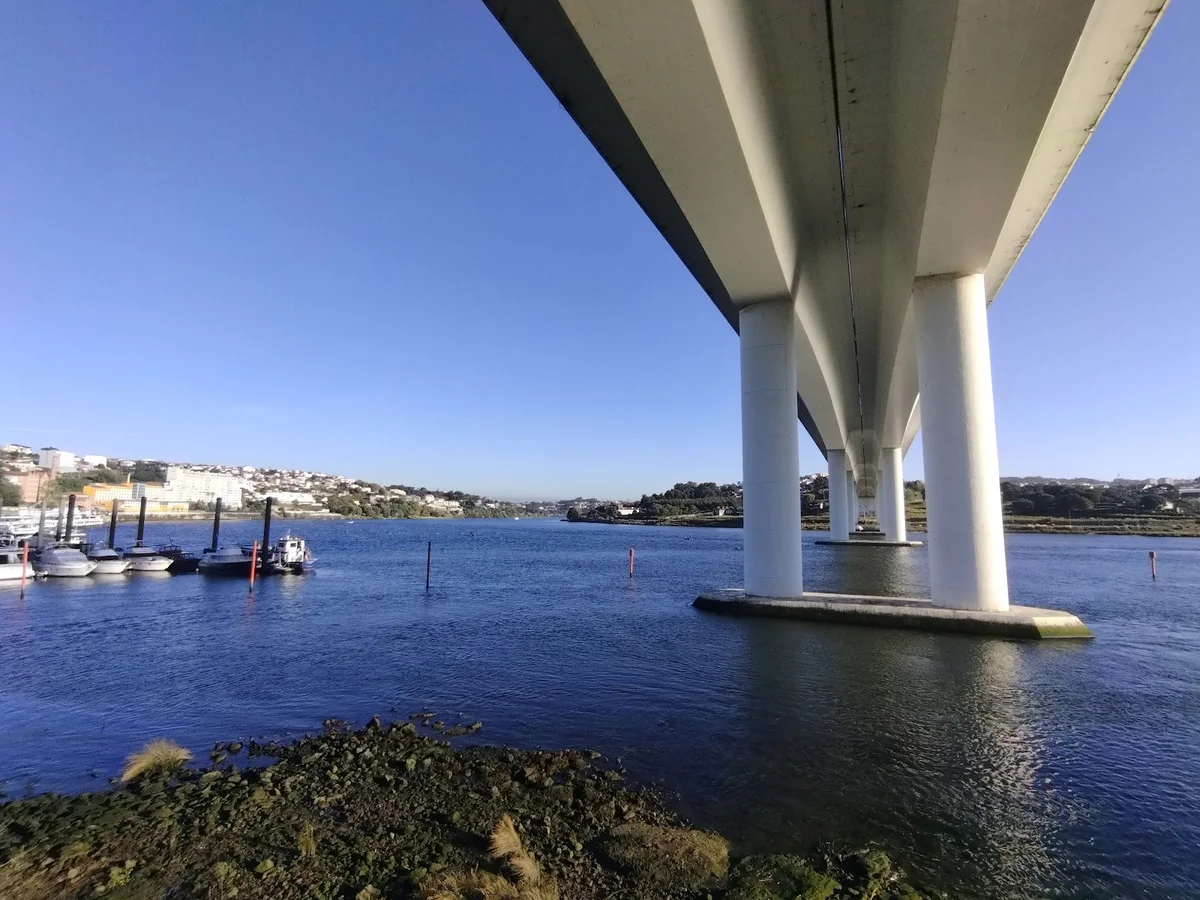
Opened in 1995, this bridge was designed to alleviate traffic congestion in the city center. It functions as a key part of the inner ring road system, facilitating smoother entry and exit points for Porto.

Infante Dom Henrique Bridge

History

Historical Context of How Many Bridges in Porto Exist

Before iron, there were boats. In 1806 the Ponte das Barcas opened, a pontoon of moored vessels lashed together between Ribeira and Vila Nova de Gaia. On 29 March 1809, fleeing the troops of Marshal Soult, hundreds of residents crowded onto its deck; the planking gave way and the Douro took them. A plaque on the quay records the loss. The city answered in 1843 with the Ponte Pênsil, a suspension crossing of iron cables anchored in granite towers. Any honest account of how many bridges in Porto now span the river begins with these two vanished works. The industrial turning point came on 4 November 1877. King Luís I and Queen Maria Pia inaugurated the railway bridge that still carries the queen's name, built by Gustave Eiffel's firm under the calculations of Théophile Seyrig. Its wrought-iron arch cleared 160 metres without a pier set in the current, the longest single span then standing anywhere. Nine years later Seyrig returned on his own account. His Société de Willebroeck took the commission, and on 31 October 1886 the double-deck Ponte Dom Luís I opened, its 172-metre arch rendering the Pênsil obsolete. Two decks, two cities, one hinged arch: the formula governed every crossing that followed. Concrete inherited that formula. Edgar Cardoso's Ponte da Arrábida, inaugurated 22 June 1963, carried a reinforced-concrete arch of 270 metres, then the widest of its type in the world. Cardoso returned in 1991 with the São João railway bridge, which retired Maria Pia after 114 years of traffic. The Ponte do Freixo followed in 1995. On 24 March 2003 the Ponte do Infante Dom Henrique closed the sequence, a 280-metre arch measuring roughly 1.5 metres in depth at the crown. What survives on site is legible from the water. The granite pylons of the 1843 Pênsil still stand beside Luís I, dated and weathered. Maria Pia holds its position upstream, shut to trains since 1991 and classified as national heritage. Anyone counting how many bridges in Porto cross the Douro today is reading one continuous ledger of engineering, from riveted iron to post-tensioned concrete. Commentary on as pontes do Douro, and on the wider set of Porto landmarks along both banks, still points to the rock faces at Arrábida where the 1963 falsework was anchored.

1806

The Ponte das Barcas, a pontoon of moored boats, links Ribeira to Vila Nova de Gaia.

1809

On 29 March the pontoon collapses under crowds fleeing Marshal Soult's troops, with heavy loss of life.

1843

The Ponte Pênsil opens, a suspension span carried on iron cables anchored in granite towers.

1877

King Luís I and Queen Maria Pia inaugurate the Maria Pia railway bridge on 4 November, its 160-metre wrought-iron arch the longest single span then built.

1886

Théophile Seyrig's double-deck Ponte Dom Luís I opens on 31 October with a 172-metre arch, replacing the Ponte Pênsil.

1963

Edgar Cardoso's Ponte da Arrábida is inaugurated on 22 June with a 270-metre reinforced-concrete arch, the widest of its type at the time.

1991

The São João railway bridge enters service and Maria Pia is withdrawn from rail traffic after 114 years.

2003

The Ponte do Infante Dom Henrique opens on 24 March, spanning 280 metres with an exceptionally shallow concrete arch.

What to see

Identifying Each Landmark for How Many Bridges in Porto You See

The Douro River is spanned by six distinct bridges, each representing different eras of engineering and architectural evolution in Porto. Understanding their structural differences provides context for the historical connection between Porto and Vila Nova de Gaia.

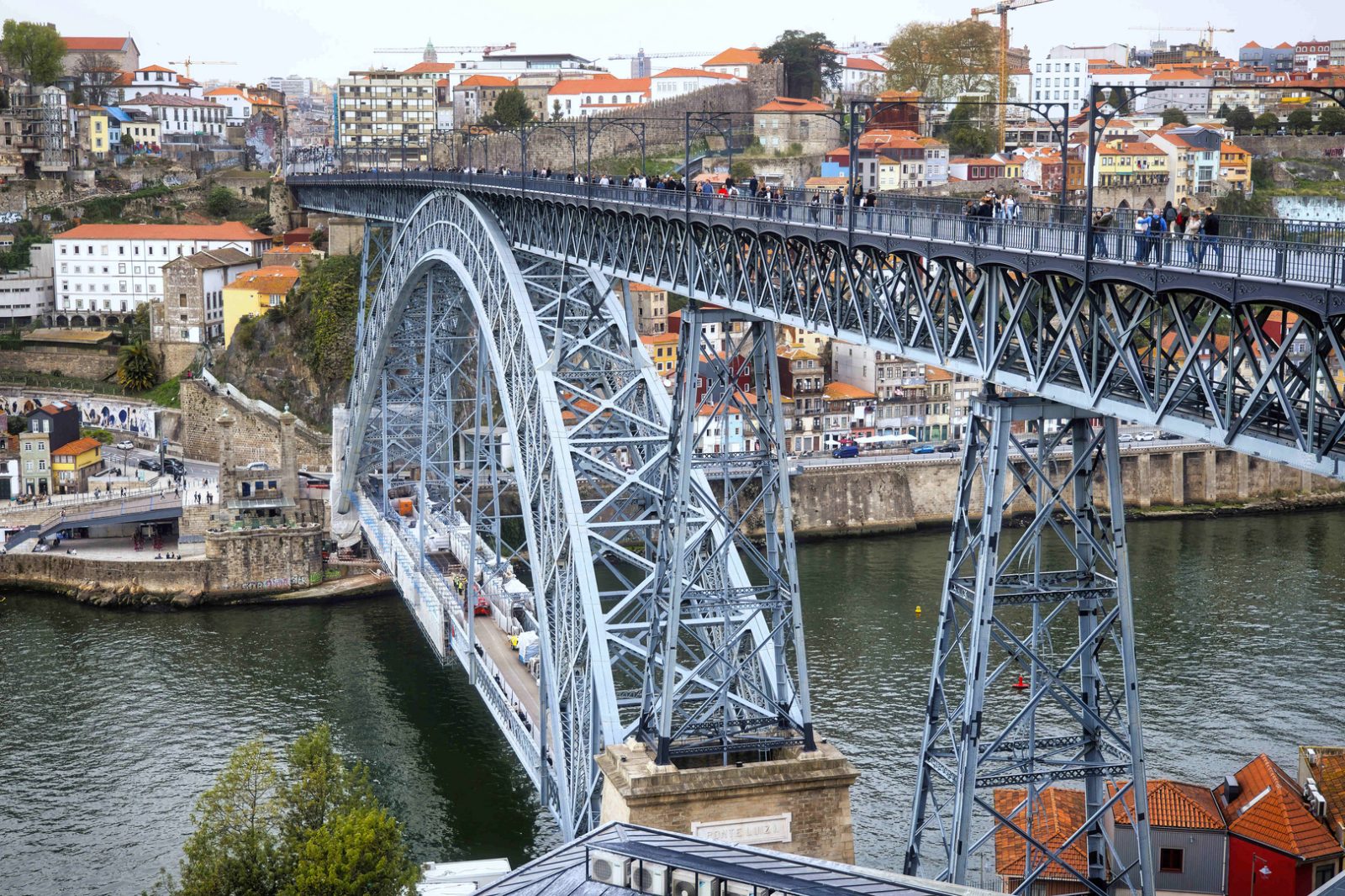
Ponte Dom Luís I

Ponte Dom Luís I

This double-deck metal arch bridge, completed in 1886, is the most recognizable landmark in the city. Its iron design features a pedestrian walkway on the top deck and road traffic below.

View from the river level to appreciate the scale of the arches.
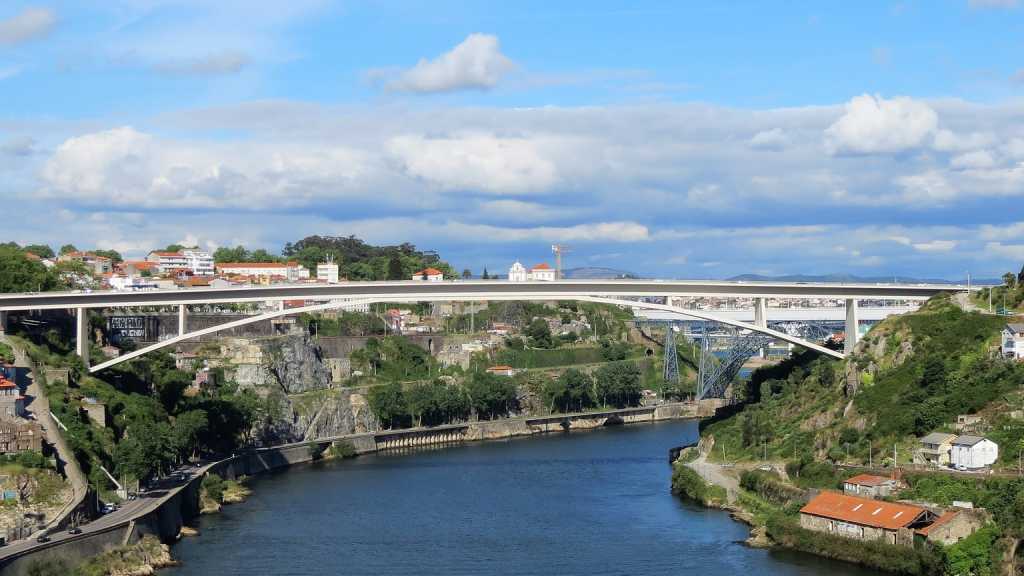
Ponte do Infante

Ponte do Infante

Completed in 2003, this bridge features a single slender arch spanning the river. It replaced the upper deck traffic of the Dom Luís I bridge and showcases modern structural engineering.

Observe the bridge from a distance to see its thin profile.

Ponte Maria Pia

Ponte Maria Pia

Designed by Gustave Eiffel and completed in 1878, this railway bridge was a milestone for iron construction. It served as the primary rail link for over a century before being decommissioned.

Look for the intricate lattice framework typical of late nineteenth-century engineering.

Ponte de São João

Ponte de São João

This concrete railway bridge, opened in 1991, replaced the Maria Pia bridge for train traffic. It is known for its stark, functionalist design and triple-span concrete arches.

Contrast this concrete design with the older iron bridges nearby.

Ponte da Arrábida

Ponte da Arrábida

Completed in 1963, this bridge held the record for the longest concrete arch span in the world at the time of its opening. It serves as a vital motorway link for the city.

Spot the heavy concrete supports that anchor the span.

Ponte do Freixo

Ponte do Freixo

Completed in 1995, this bridge consists of eight parallel spans designed to alleviate traffic congestion. It is the easternmost of the six bridges crossing the Douro.

View the rhythmic pattern of the bridge segments from the water.

Opening hours

Opening Hours to See How Many Bridges in Porto by Boat

Cruise operations run daily throughout the week to provide access to the bridges along the Douro River. The schedule remains consistent across all days to accommodate visitors.

Monday
10:00–18:00
Tuesday
10:00–18:00
Wednesday
10:00–18:00
Thursday
10:00–18:00
Friday
10:00–18:00
Saturday
10:00–18:00
Sunday
10:00–18:00
Visitors are advised to arrive between 10:00 and 16:00 to ensure departure before the final daily boat service.
Book

Check availability

Frequently asked

Frequently Asked Questions About How Many Bridges in Porto

Everything you need to know about how many bridges in porto

How many bridges in porto span the Douro River?

There are six iconic structures that cross the Douro River, often referred to as the six bridges of Porto. These historic landmarks connect the city of Porto with Vila Nova de Gaia.

Why are the Porto landmarks so famous?

These structures are famous for their unique engineering, including iron designs attributed to Gustave Eiffel and his contemporaries. They represent significant architectural heritage in the region.

When should I visit the Ribeira district?

The best time to explore the riverfront is during your stay in Porto, typically between 10:00 and 16:00 to avoid peak heat. Planning your visit for these hours ensures a comfortable experience.

Is a river boat tour worth the cost?

A cruise allows you to view the architectural details of these river crossings from the water. Tickets are 20 EUR for adults, providing an educational perspective on the city's history.

Can children join the cruise tours?

Yes, families are welcome on the cruise tours to learn about the six bridges of Porto. It serves as an accessible way for all ages to enjoy the scenic waterfront.

How many bridges in porto can be seen on a cruise?

A standard cruise covers all six bridges in Porto, allowing you to see each one from the deck. This is the most efficient way to view every structure in a single trip.

Are there specific operating times for cruises?

Cruises operate daily from 10:00 to 18:00 throughout the week. You can verify the latest information on the official site.

Is there a recommended window for sightseeing?

To ensure a pleasant experience, try to arrive within the 10:00–16:00 window. This helps you avoid the mid-afternoon heat and ensures you reach the pier before final daily departures.

Keep reading

More guides & pages